
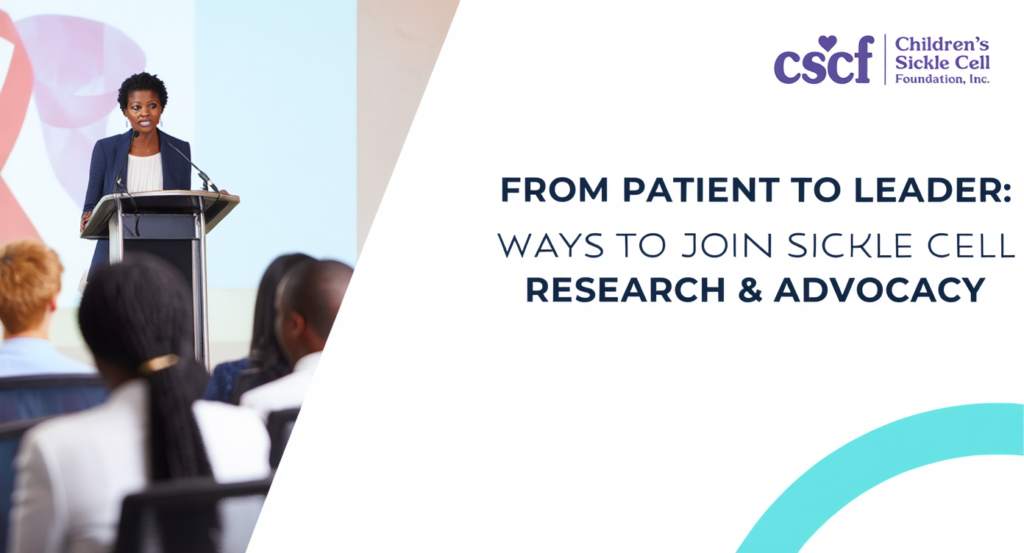
Many young adults with Sickle Cell Disease (SCD) grow up going to doctor visits, taking medicine, and managing pain. For many years, doctors and parents made most of the decisions. But adulthood brings change. You are not just a patient anymore. You are an expert in your own experience.
You understand your challenges and strengths better than anyone else. Many young warriors now speak up and lead change. They join research, share their stories, and support advocacy efforts.
At the Children’s Sickle Cell Foundation, we believe your voice matters. You can help improve care and shape a better future.
Why Your Voice Matters
Stories matter more than labs sometimes. Real life shapes research when voices rise up. Trials gain power through those who face pain daily. Care shifts because someone dares to speak plainly. New treatments emerge where truth meets science.
You can also speak with leaders and raise public awareness. In addition, you can teach others and reduce stigma. As a result, families receive better support. Your voice brings real change and strengthens the fight against sickle cell disease.
1. Own Your Story (The Power of Self-Advocacy)
Lead your own care before you lead others. Advocacy starts in the doctor’s office. As you move to adult care, take control of your health. Go to your appointments prepared.
- The Leader Move: Keep a digital health record on your phone or computer. Learn your sickle cell type (genotype). Ask your doctors questions. If you do not understand something, ask, “Why?”
When you speak up for yourself, you build leadership skills. You grow stronger and more confident. Self-advocacy helps you manage your health on your own and prepares you to support others.
2. Become a “Citizen Scientist” in Research
Become a citizen scientist. Scientists create new treatments like CRISPR and better medicines. Research moves fast and needs community support. Today, patient-centered research gives you a voice to guide studies.
- How You Can Get Involved: Look for Patient Advisory Boards (PABs). Many hospitals and drug companies invite young adults to review their study plans. You can help make sure the studies respect patients and meet their real needs.
- Clinical Trials: Starting a journey in a clinical trial means stepping into uncharted medical territory. Because of your presence, future patients might walk paths lined with more effective therapies. Real stories shape science when participation reflects varied lives and everyday realities.
3. Legislative Advocacy: Raise Your Voice
Your story can change the law and boost support for sickle cell disease. Contact local and state leaders to share how SCD affects your life and why care and services matter.
- Take Action: You do not need to be a politician to make a difference. Write a simple, honest letter. Or make a short three-minute phone call to your state representative. Tell them why transition services help young adults survive and succeed in your state.
4. Digital Advocacy and Awareness
In 2026, you can lead through a screen. Social media can be tricky, but for the chronic illness community, it is a lifeline.
- Debunking Myths: Use your platform—like TikTok, Instagram, or a blog—to debunk myths. Teach people the truth about what the condition really looks like.
- Blood Donation Awareness: Not everyone realizes that matching blood types matters for patients. Try pushing neighborhood donation events while sharing how varied donors help those in need. Social platforms let your voice spread facts, spark change, and sometimes even hope.
Join an Adult Support Team
True leadership happens in a community, not alone. Join a peer group for adults to start mentoring and supporting each other. Connect with people facing the same challenges, like college or work.
Build a network of strength. Leadership means giving encouragement to someone newly diagnosed or sharing tips on managing your health during a new job or life stage.
Final Thoughts: The Future is Yours
Transitioning to adulthood means more than managing your condition—it means taking control of your life. By joining a research focus group, speaking at events, or mentoring a younger “warrior,” you make a difference. Get involved in Sickle Cell Research and Advocacy to help shape better care and support.
Step into your role as a leader. Reach out to the Children’s Sickle Cell Foundation to learn about the Young Adult Transition program and join local advocacy efforts. Your story has power—use it to make a difference.
